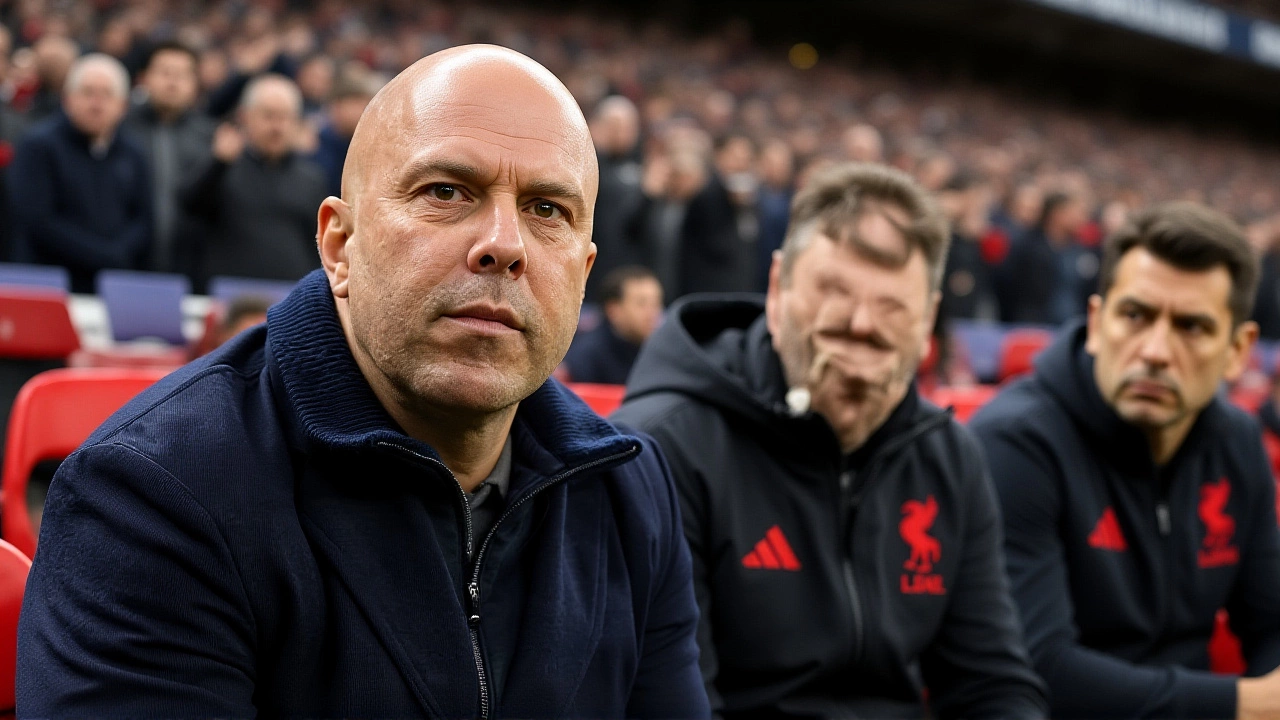
When Arne Slot, head coach of Liverpool Football Club, looks at his calendar for April 2026, he doesn't see a month. He sees a gauntlet. Six matches. Three competitions. Twenty-two days. This isn't just another stretch in the English football season; it’s the crucible that will likely determine whether Slot’s maiden campaign ends with silverware or regret.
The fixtures are brutal by design and circumstance. Liverpool must travel to Manchester City for an FA Cup knockout tie, face Paris Saint-Germain in two-legged Champions League drama, and navigate three Premier League hurdles against Fulham, Everton, and Crystal Palace. The margin for error? Non-existent. One slip-up could send them home from Europe. Two might derail their title hopes entirely.
The Schedule That Breaks Managers
Here’s the thing about modern football management: you can have the best tactics in the world, but if your schedule is rigged against you, luck often decides the outcome. In this case, the rigging feels intentional. Between April 4 and April 25, 2026, Liverpool plays six high-stakes games across domestic cups, European elite competition, and the league table chase.
It starts on Saturday, April 4, with an away trip to Manchester City. Kick-off is early—7:45 AM local time—but the stakes are late-night anxiety levels. This is an FA Cup quarter-final (or semi-final, depending on bracket progression), meaning one mistake costs you the trophy. City at home in April? They’re usually peaking. Liverpool needs perfection here.
Then comes the real test. On Wednesday, April 8, Liverpool flies to France for the first leg of their UEFA Champions League knockout tie against Paris Saint-Germain. Four days later, they return to Anfield for the second leg on Tuesday, April 14. Both matches kick off at 3:00 PM local time. That’s not enough recovery time for a squad dealing with fatigue, injuries, and the mental toll of continental pressure.
Sandwiched between these European giants are three Premier League clashes: Fulham at home on April 11 (12:30 PM), the Merseyside derby against Everton away on April 19 (9:00 AM), and Crystal Palace at Anfield on April 25 (10:00 AM). Each game carries weight—not just for points, but for momentum, confidence, and survival in the top four.
Why These Six Matches Matter More Than Any Other Month
Let’s be clear: April has always been a make-or-break month in English football. But when you combine cup elimination risk, European advancement pressure, and league position volatility into a single four-week window, something shifts. Players get tired. Coaches get stressed. Fans lose sleep.
For Arne Slot, this run defines his legacy so far. Sky Sports called it a “horror run of fixtures” that will define his “maiden Liverpool campaign.” And honestly? They’re right. If Liverpool stumbles here, critics will say he couldn’t handle the pressure. If they thrive, he’ll be hailed as a tactical genius who delivered under fire.
The FA Cup match against Manchester City is particularly telling. It’s not just about winning—it’s about proving Liverpool can compete with England’s dominant force outside the league context. A loss there sends a message. A win builds belief. Same goes for PSG. Beating them—even once—is a statement. Losing both legs? That’s a narrative shift nobody wants.
Rotational Risks and Squad Depth Under Fire
Slot faces a nightmare scenario: rotate too much, and you weaken key lines. Play your starters every minute, and they burn out before May. With only seven days between the PSG legs and minimal rest around the Everton derby, squad depth becomes critical.
Liverpool’s bench strength will be tested like never before. Can midfielders like Dominik Szoboszlai or Ryan Gravenberch step up when needed? Will defenders such as Ibrahima Konaté or Virgil van Dijk hold firm after back-to-back heavy fixtures? These aren’t hypotheticals—they’re decisions Slot must make weekly, sometimes daily.
Injury history suggests caution. Last season, similar scheduling led to hamstring issues among attackers and defensive lapses due to fatigue. This year, medical staff and coaching staff need flawless coordination—or else.
Fan Reactions and Media Pressure Build Daily
On social media, fans are already bracing themselves. Posts from outlets like *This Is Anfield* frame these six games as “defining,” which amplifies expectations. When every tweet says “this makes or breaks us,” the psychological burden grows heavier.
Media analysts predict chaos. Some argue Liverpool should prioritize Europe over the league. Others insist the Premier League remains king. Neither side offers easy answers. What’s certain is that Slot will face scrutiny regardless of outcome—if he wins, it’s expected. If he loses, it’s catastrophic.
Even neutral observers notice the pattern. ESPN lists all six dates clearly, emphasizing broadcast coverage across ESPN+, Paramount+, and NBC networks. Visibility means attention—and attention means pressure.
Historical Context: How Past Managers Handled Similar Runs
We’ve seen this before. Jurgen Klopp faced comparable stretches during Liverpool’s peak years. In 2019, for instance, Liverpool played five crucial games in late March and early April, including clashes with Tottenham, Arsenal, and Barcelona. They survived—but barely. Fatigue showed in narrow escapes and lucky bounces.
Jürgen Klopp’s approach then was aggressive rotation mixed with emotional motivation. He relied heavily on player loyalty and team spirit. Slot may adopt similar strategies, though his style leans more toward structured possession and positional discipline. Whether that translates well under extreme time constraints remains unproven.
Compare that to Pep Guardiola’s Manchester City, who often manage congested schedules through superior squad depth and data-driven load management. Liverpool lacks that same luxury. Their roster is talented, yes—but not infinitely deep. Every substitution matters now.
What’s Next: Looking Beyond April Toward Title Deciders
If Liverpool survives April intact, May opens up possibilities. Wins against weaker opponents could surge them into title contention or secure Champions League qualification. Losses? Well, let’s not go there yet.
But beyond trophies, there’s another layer: development. How does Slot adapt mid-season? Does he tweak formations based on opponent weaknesses? Can he keep players motivated despite exhaustion? These questions matter long after the final whistle blows in April.
Experts suggest watching how Slot handles substitutions. Early changes signal proactive management. Late swaps indicate desperation. Either way, each decision reveals character—and capability.
Frequently Asked Questions
Which six fixtures define Liverpool’s April 2026 campaign?
The six defining fixtures are: Manchester City (A) on April 4 in the FA Cup; Paris Saint-Germain (A) on April 8 in the UEFA Champions League first leg; Fulham (H) on April 11 in the Premier League; Paris Saint-Germain (H) on April 14 in the UCL second leg; Everton (A) on April 19 in the Premier League; and Crystal Palace (H) on April 25 in the Premier League.
Why is this period considered decisive for Arne Slot’s tenure?
Because results directly impact Liverpool’s chances in three major competitions—the FA Cup, UEFA Champions League, and Premier League. Success here validates Slot’s methods; failure invites criticism. Given his first season status, performance under pressure shapes public perception and internal confidence.
How does fixture congestion affect player performance?
Fatigue increases injury risk and reduces technical accuracy. Studies show players perform worse in third consecutive matches without adequate rest. Liverpool’s tight turnaround between PSG legs and the Everton derby limits recovery windows, forcing strategic rotations that could weaken starting XI cohesion.
What role does squad depth play in surviving this stretch?
Squad depth allows managers to rotate effectively without sacrificing quality. Liverpool’s ability to field competitive alternatives in midfield and defense determines resilience. Teams with deeper benches historically fare better in multi-competition seasons, especially during congested periods like April 2026.
How do broadcasters cover these matches?
ESPN covers the FA Cup clash vs. Manchester City via ESPN, ESPN Deportes, and ESPN+. Paramount+ broadcasts both PSG ties. NBC handles the Fulham and Crystal Palace Premier League games. High visibility ensures global audiences witness Slot’s managerial trial firsthand.